
By Jim Lewis, CEO Enhanced Retail Solutions LLC
When you boil it down, forecasting and inventory planning is a game of educated guessing and risk assessment. A lot is dependent on the accuracy of sales or shipment history. But we all know there are other factors that affect sales, many of which are uncontrollable.
This is where the planner’s skills are truly tested. They blend history with “merchant-sense”- that innate feeling based on their experience and what they see and hear around them. They may compare multiple sets of numbers to help them make decisions. It is a good approach, but they generally don’t have a sophisticated enough system to automate that process. You just cannot scale that in a spreadsheet.
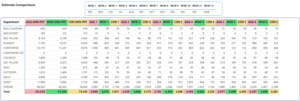
Comparing multiple forecast estimates side by side to conduct what-if scenarios
Depending on how many sku’s are managed, it may make sense to isolate items with the greatest volatility or most inconsistent history. Then conduct scenario analysis on those items. What we really want to know is what our exposure is in terms of excess inventory if sales are lower than we predicted. Or conversely, lost sales due to the sin of not having enough because sales were better than predicted.
Best Practices
Even though every company plans differently, there are several basics that I think all planners would agree are best practices. This is what we think they are and have baked them into our solutions:
- Once a baseline estimate is calculated, apply different “boost” factors (positive and negative). For example, a boost factor of 1.1 would add 10% to the baseline estimate. The line them up the higher and lower adjusted estimates against the inventory (ATS & WIP by month). Calculate the WOS (weeks of supply) at the end of each month. Then compare the differences in ownership between higher and lower estimates.
- Compare baseline estimates against an alternate estimate. From a wholesaler’s point of view, that would be their retail partner’s numbers. But it could also come from other departments within your company such as the sales team or finance. Comparing them and showing the differences of what the outcome would be of each helps decision makers assess the risk.
- Similar to point 1 but more time consuming, create a conservative, moderate, and aggressive estimate for each item. Then toggle between them to see how each scenario plays out against the inventory. The trick is to see them all at one time and be able to interact with them.
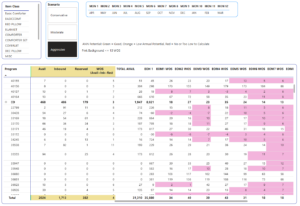
Forecasted inventory position based on aggressive estimates
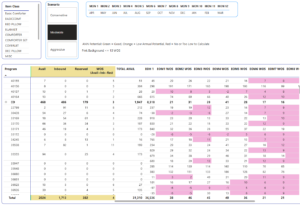
Forecasted inventory position based on moderate estimates

Forecasted inventory position based on conservative estimates
Inventory is Capital
Planning inventory is like investing in any other asset- real estate, stocks, etc. You want to ensure the greatest rate of return for the capital you are investing. You will not always be right. Famously, buyers and planners carry the wounds of the buys they were wrong on, constantly reminded of those decisions that led to costly inventory gluts or lost sales. No one remembers that most of your buys were right on. But providing the stakeholders with the risks associated with buying may create a more collective decision-making process.
Comments are closed