
By Jim Lewis, CEO Enhanced Retail Solutions LLC
It’s an age-old question for wholesalers: create a forecast based on past shipments or on POS sales history? I have had many heated conversations with folks on both sides of the table. I’m generally in the POS corner because retailers order based on what’s selling. Although I have seen retailers not ordering any more than they usually do even when sales trends are up significantly or shut off replenishment altogether.
The answer depends on a variety of factors. And there is nothing that says you can’t use a different method for each channel you manage. You just need a flexible system to do it 😊
Benefits of POS Based Forecasts
The benefit of using POS as a basis is that you can track the latest selling trends and make sure inventory levels follow them. By looking at store level POS data you can determine lost sales and add that back into the basis. Additionally, buyers don’t think in terms of shipments- they think in terms of sales and weeks of supply based on projected sales.

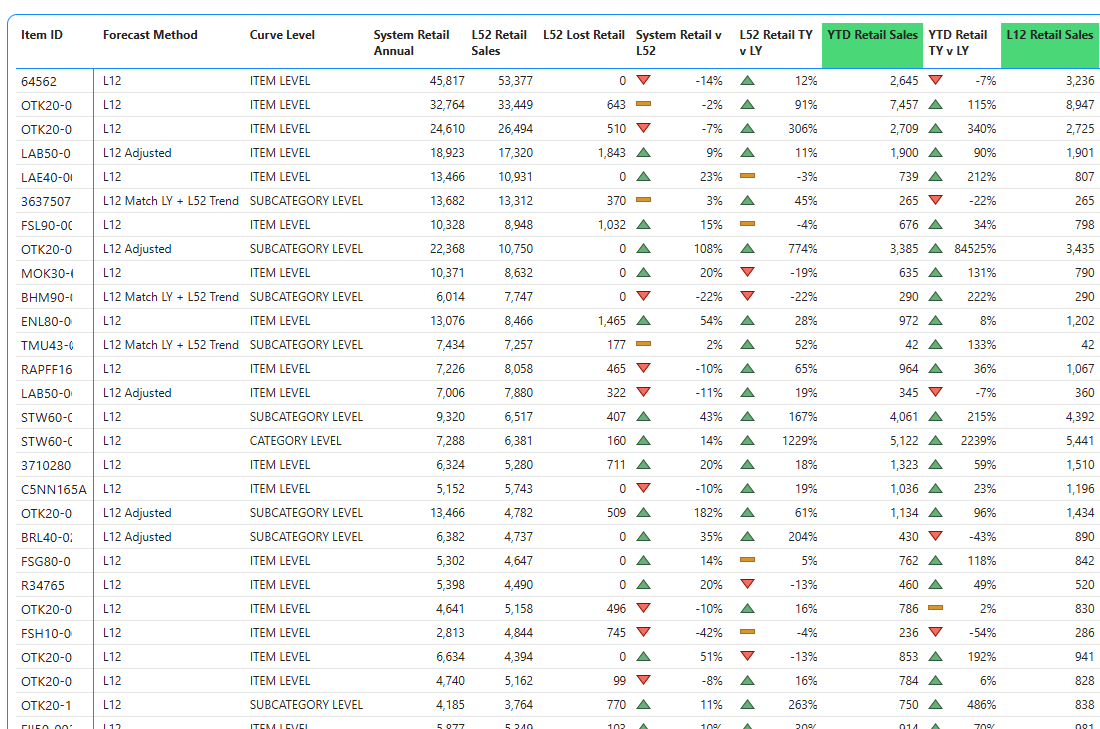
Tracking POS trends and assigning the appropriate methodology to build a POS based demand plan/forecast.
Benefits of Shipment Based Forecasts
It may make sense to use a shipment history-based forecast for items with low volume, extreme seasonality or that lack consistency in the flow of shipments. It depends on what you consider “replenishment”. If a low volume fringe sku sells 3 units per year, should it really be replenishment? Maybe if it’s a diamond ring. Not if it is an XXXS Aqua T-shirt (no offense to the 3 people that like XXXS Aqua T-shirts). It all comes down to how you attribute an item. In our demand planning system, we assign the appropriate forecast model based on volume, seasonality, maturity, rate of sale consistency, etc. Assigning the same methodology to every item just doesn’t make sense. In some cases, math just isn’t going to predict what or when you will sell something. A safer bet is to just match future shipments based on past shipment history.

Forecast based on past shipments
A compromise solution is using a mixture of both methods. Perhaps the basis of the forecast is based on shipments, but then the future estimates are adjusted based on the POS sales trend. For example, if widgets as a category is up +20% year to date, once future shipments are calculated, add 20% to it.
Have a Dialogue
Whichever way you choose, having a healthy, collaborative, ongoing dialog with the retail planner is a must. They have the pencil and hold the keys to the ordering gates. They are generally less passionate about design and focus more on the truth inventory numbers expose about the performance of an item. Smart suppliers help their retail planning partners by doing a lot of detail-oriented work such as quantifying lost sales by sku-store, cataloguing over or under inventoried stores and providing actionable recommendations to make inventory more productive.
Most importantly, you can get a sense of their philosophy and temperature for inventory allowance. Are they running flat for a while? Are the “powers that be” shutting off replenishment (a sin, often committed by a chain in the mid-tier…). Sometimes a retailer will give you a forecast which at the very least you can compare to your own estimates.
Production Schedule
Regardless of the basis, a forecast must ultimately turn into a shipping schedule. This is where you line up the needs against wholesale inventory (ATS) and future production (WIP). Depending on the retailer and model, you may also include what the retailer owns. There are more parameters around the actual planning of shipments than the forecast estimates. Depending on how you ship, filling a container, minimum order quantities, etc. come into play regardless of what the basis of the forecast is.
Comments are closed