

By Jim Lewis, CEO Enhanced Retail Solutions LLC
Vendor Managed Inventory is when a supplier takes the responsibility of managing retail inventory by determining the most productive allocation by sku by store. They calculate needs, create orders, and ship the product. The buyer generally provides the guidelines and budget, but the retailer’s replenishment system is not used to keep stores in business. The supplier’s resources are used to maintain and manage the inventory. The buyer bears much less risk than the supplier. There are many mutual benefits for both suppliers and retailers, but in my opinion there is much undeserved hesitation on both sides.
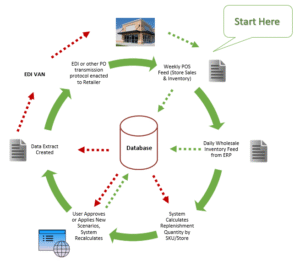
Each week, the process starts when the retailer transmits store level POS data to the supplier. This data is merged into a database along with the supplier’s wholesale inventory. The system then calculates the rate of sale by SKU by store and determines the optimal inventory level to sustain that rate of sale. The cost of the order is sent to the user for approval. If not approved, and constraints exist, the system re-calculates the order based on the user’s scenario selections. Once approved, a data extract is created with all the required fields to generate a PO using EDI or any other format.
Why VMI?
It’s mutually beneficial for supplier and buyer. Suppliers can be laser focused on their SKU’ s ensuring the proper balance of inventory across the stores. The buyer gets increased sales and profit with a more productive inventory. Retailer’s replenishment systems are not great with very few exceptions. They end up with unproductive inventory because those systems aren’t smart. Some stores have too much, and some stores have too little. VMI enables a more intelligent approach to determining which stores should have which products in the right quantity. It also enables a more accurate long term forecast to improve production planning.
Some retailers shy away from VMI because they think suppliers will take advantage of them. It’s really the opposite. Suppliers want to build trust and they know they can’t do that by shoving too much inventory into stores. Plus, it can be very simply policed by having the buyer sign off on the budget each week.
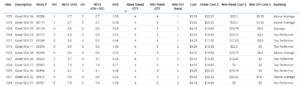
The system analyzes every SKU-store combination to determine it’s strength and potential. It adjusts based on the most current trends. Smart reporting including AI is used to fine tune recommendations.
How Does VMI Work?
Many suppliers have the planning knowledge and experience, but don’t have the right tools. For large sku-store combinations you must use some system to do the calculations. The math is simple, but the sheer volume and speed required to do it is not. The key is determining the rate of sale by SKU by store. Business rules may be applied like not counting a week if there’s no inventory. Then determine how much inventory a store should have based on that rate of sale and a weeks of supply model, or minimum quantity. Finally, compare the need with the current on hand and on order and write an order for any shortfall. Rinse and repeat weekly. The supplier must also ensure they carry enough wholesale inventory to fulfill weekly orders.
Getting an accurate rate of sale by store is the cornerstone for accurate forecasting. So many people just look at the total number they sold and use that as a basis. But what if 30% of the stores were sold out? Or it takes too long to get back in stock? It’s important to quantify lost sales– and build that back into the basis.
VMI is a way to ensure that the inventory gets to the right level to sustain each store’s rate of sale- and reach their potential. So many retailers just put a minimum quantity in a store- and maybe that works if they can replenish that store in a day- but most can’t. Furthermore, AI can play a role in the prediction of which skus and stores will run out more frequently and when. That information can be baked into the models.

Different overview levels are available for users who don’t want to fully automate VMI. Here they can make adjustments to the logic and conduct “what-if” scenarios on the data. This is especially helpful if a specific budget is provided and the order needs to be constrained to meet the budget.
VMI Constraints
One tricky situation is where the needs required to sustain the rate of sale don’t fit into the budget. In those cases, different scenarios need to be vetted. For example, only feeding the high velocity stores or giving every store a minimum amount even though some could use more. This is the area where most supplier’s resources fall short. There are many scenarios possible, and the time required to conduct the analysis can be considerable. A smart system can eliminate that issue.

The ERS VMI tool enables the user to select different allocation scenarios to create the most optimal use of inventory.
ERS helps suppliers who have VMI programs. We provide both the consultation as well as the systems required to make it work. We are unique in the sense that it is not 100% automated. The ability to talk with our customers and strategize each week provides more value and puts more ideas on the table, especially when it comes to those scenarios mentioned before. Contact us for more information.
Comments are closed