
By Christian Hart, Business Analyst Intern at Enhanced Retail Solutions
Last week, I began my summer internship at Enhanced Retail Solutions (ERS). The main focus is on inventory planning. My experience so far has been filled with lots of learning.
It Depends
My main takeaway thus far is that decision-making in inventory planning is always situation-specific. The CEO, Jim Lewis, often reminds us while looking at spreadsheets and data visualizations, the answer to most data analysis questions is usually “it depends.” Profits, inventory levels, and other key metrics don’t mean much without the proper context. What makes a number meaningful depends on variables like a client’s strategy, the time of year, or supply chain constraints. To me, that’s a good thing because it keeps the job interesting.
Retail Selection
I’ve been surprised by just how much analysis goes into deciding what inventory ends up in stores. As a consumer, I used to think retail selection was mostly about trends and market research. The more I learn, the more I realize it’s a deeply mathematical and analytical process. At the same time, data analysis has its limits. Unpredictable factors—like tariffs—can force plans to dramatically change. With many clients sourcing clothing from China, the current trade war has added another layer of complexity and unpredictability to their current inventory planning.
More Questions
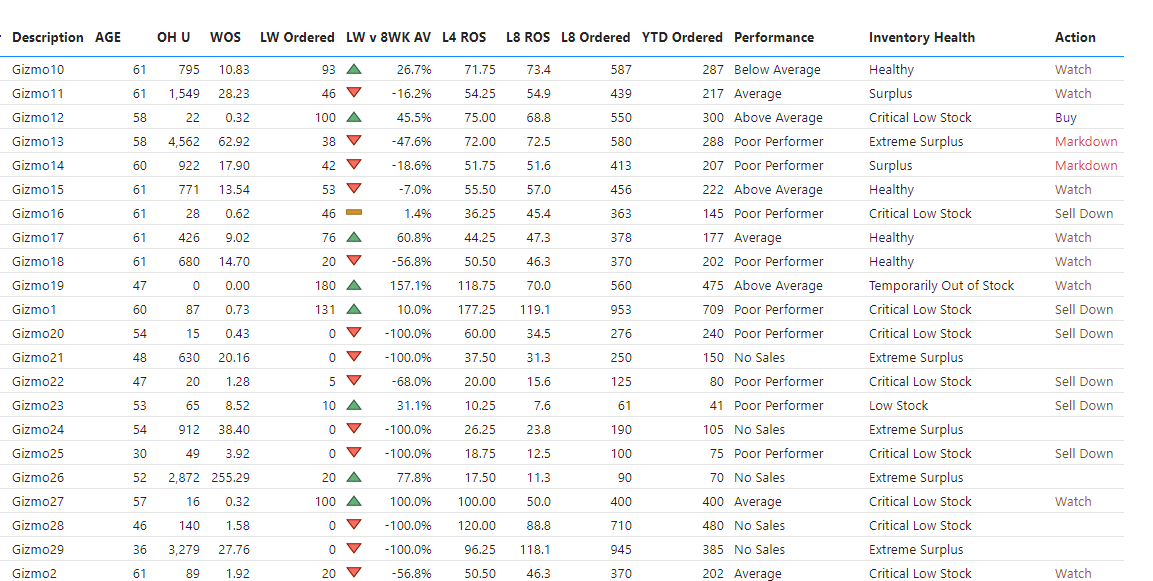
As I continue in this role, I’m eager to better understand how inventory planners approach a company’s dataset for the first time—and every time after. What strategies help make rows and rows of data less intimidating? How do experienced planners zero in on the most relevant data points? What indicators do they prioritize?
I can’t wait to keep learning about all of this and more!
No responses yet