
By Josh Coughlin, CTO, Enhanced Retail Solutions LLC
Custom software has a reputation problem.
Despite years of success stories, many companies still hesitate when the idea of building custom software comes up. The reaction is often immediate and emotional: too expensive, too risky, too slow, what if we don’t get exactly what we want?
Ironically, the same companies often accept daily inefficiencies, inaccurate reporting, and hours of manual work as “just the way it is.” The fear of custom software ends up costing far more than the investment itself.
So why does this fear exist—and why is it increasingly misplaced?
The Real Cost of “Making Do”
Most organizations don’t lack data. They lack usable data.
Sales data lives in one system. Inventory data lives in another. Marketing performance lives in spreadsheets. Finance has its own tools. The result is a familiar routine:
- Pull data from multiple systems
- Manually combine it
- Fix formatting issues
- Check for discrepancies
- Re-check accuracy
- Finally… analyze it
By the time insights are ready, they’re already outdated.
This process doesn’t just waste time—it wastes talent. Highly skilled people spend their days gathering, cleaning, and validating data instead of analyzing trends, uncovering opportunities, and implementing improvements.
Custom software flips that equation.
A relatively small investment in purpose-built software can automate data collection, standardize rules, and ensure accuracy from the start. The payoff is immediate: faster access to trusted data and more time spent on decisions that actually move the business forward.
Why Custom Software Feels Risky
The fear of custom software usually comes down to three concerns:
- “What if we don’t get exactly what we want?”
Companies worry they’ll invest time and money only to end up with a tool that misses the mark.
This fear is valid—if the software is built without proper discovery, user input, or iteration. But modern custom software isn’t a one-shot, black-box delivery. When done correctly, it’s collaborative, iterative, and continuously refined based on real usage.
Custom doesn’t mean guessing. It means designing around real workflows, real constraints, and real goals.
- “What if it takes too long?”
Many leaders picture year-long projects with no clear finish line.
In reality, the most effective custom software projects focus on solving one meaningful problem first. A targeted solution—like consolidating reporting, automating a manual process, or enforcing consistent business rules—can often be delivered in weeks, not years.
Start small. Deliver value fast. Expand only when it makes sense.
- “What if it costs more than expected?”
Budget overruns are another common fear, often fueled by past experiences or horror stories.
But the hidden truth is that companies are already paying—just not on a balance sheet. They pay in:
- Lost productivity
- Delayed insights
- Decision-making based on incomplete data
- Employee frustration and burnout
When custom software removes recurring inefficiencies, it often pays for itself quickly. The return isn’t theoretical—it shows up in reclaimed hours, faster decisions, and better outcomes.
The Immediate Payoff: Better Data, Better Decisions
The strongest case for custom software isn’t technology—it’s focus.
When systems are designed specifically for your business:
- Data flows automatically instead of being manually assembled
- Business rules are applied consistently
- Accuracy improves dramatically
- Reports are available when needed, not days later
This allows teams to spend their time where it matters most:
- Analyzing trends
- Identifying issues and opportunities
- Making informed decisions
- Implementing improvements
Instead of asking, “Do we trust this data?” teams can ask, “What should we do next?”
That shift alone is transformative.
The Most Important Decision: Choosing the Right Partner
Most fears around custom software don’t come from the concept—they come from poor execution.
Custom software succeeds or fails based on the partner you choose.
A strong partner:
- Has a proven track record of designing, developing, and delivering
- Understands business problems, not just technology
- Asks the right questions before writing code
- Builds iteratively and transparently
- Communicates clearly about scope, timelines, and tradeoffs
A weak partner builds what’s requested, not what’s needed—and disappears when things get difficult.
The goal isn’t just to build software. It’s to build the right solution, delivered predictably, with measurable impact.
Custom Software Is No Longer the Risky Choice
In today’s data-driven environment, relying on disconnected systems and manual processes is often the bigger risk.
Custom software, when approached thoughtfully and delivered by an experienced partner, is no longer a gamble—it’s a strategic advantage. A focused investment can eliminate daily inefficiencies, improve data accuracy, and free teams to do the work they were hired to do.
The question isn’t “Why build custom software?”
It’s “How much longer can we afford not to?”
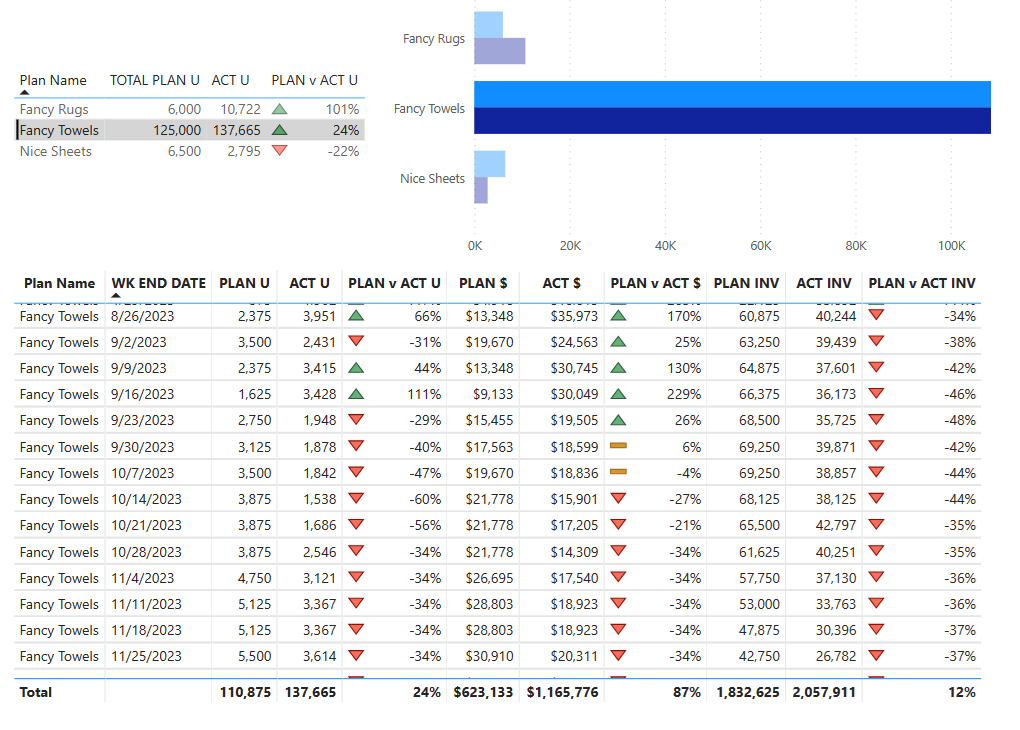
ERS offers custom reporting and inventory planning tools that are fine tuned to each businesses distinct use cases.
Comments are closed