
By Valentina Thibault, Business Analyst Intern Enhanced Retail Solutions LLC
Data looks objective, and numbers feel fixed. But the longer I spend working with sales and inventory reports covered in it, the more I realize that data is fundamentally about risk. It is about identifying and deciding what to do with it. Cleaning up a dataset isn’t just groundwork but rather the first step in making sure the decisions built on top of it can actually be trusted.
That lesson became concrete for me this summer through a conversation with CEO Jim Lewis, who described the entrepreneur spirit as one finding the ability to sleep at night knowing they could wake up the next morning having lost everything. Building something means accepting risk as an unavoidable condition of business. What ERS does, through its mission and expertise, is make that risk visible before it becomes a loss.
Quality Assurance in Modeling
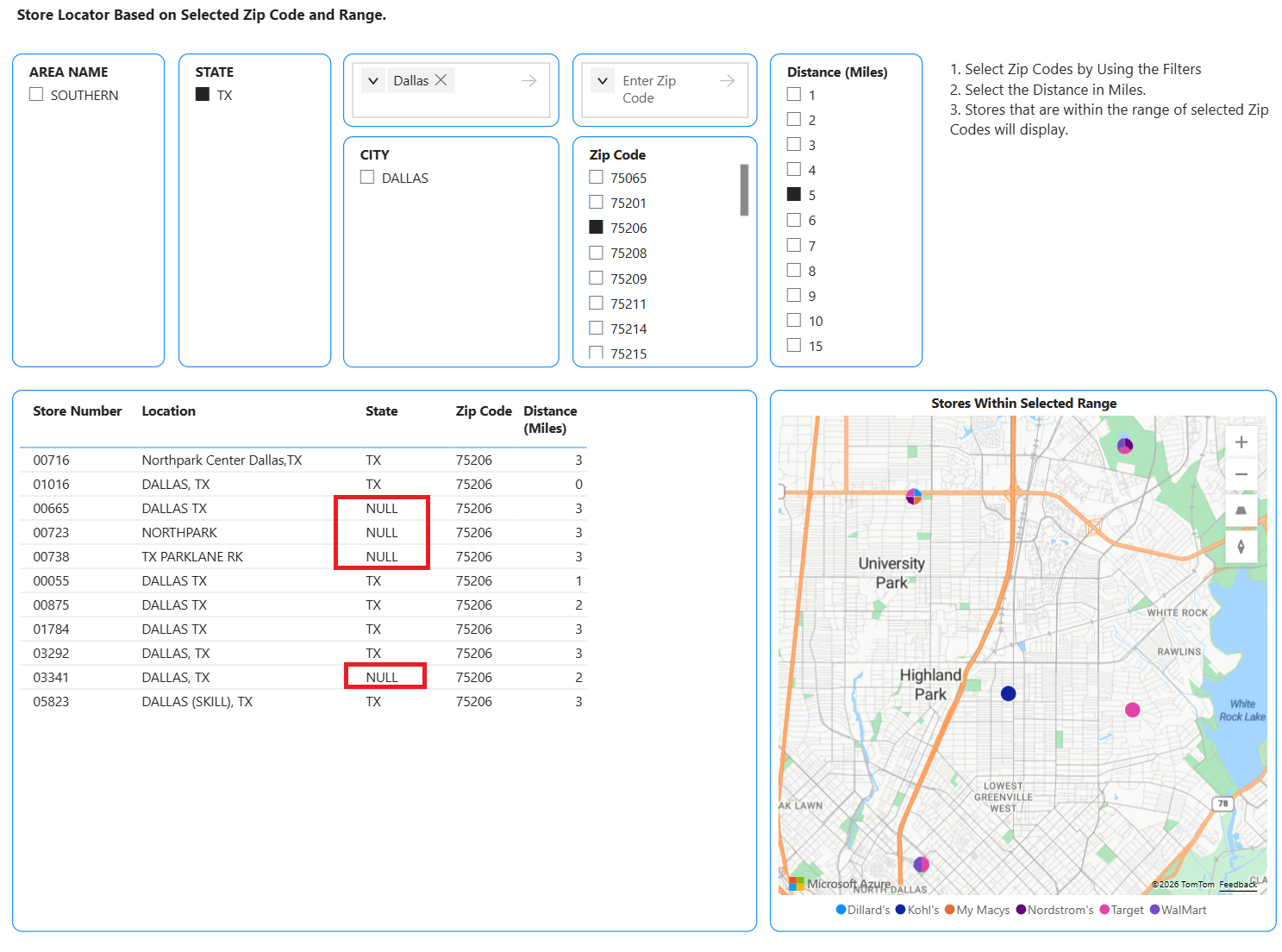
In contributing to a location intelligence tool that maps major retail stores in proximity to 2026 FIFA World Cup venues across the United States, the underlying data needed to be cleaned before geographic analysis. We worked with over 1,500 rows of store location records where several fields returned NULL across entries. An incomplete record is effectively an invisible one. In this case, a store just around the corner of a World Cup host stadium that doesn’t appear in the system is a missed opportunity the client never knows they had. Quality assurance through zip code cross-referencing was the foundation everything built on.
Data Logic and Assumptions
This experience calls back to Jim’s perspective on risk. A founder bets on an uncertain future and adjusts as reality comes into focus, paralleling the work of data analysis. Every dataset comes with gaps, and the challenge is knowing what logic and assumptions are appropriate to bridge them. Most importantly, it required being honest about where uncertainty lives. Applying the right logic separates an analysis that drives a smart decision from one that enables a weak one. Every client and dataset I encounter is unique, and learning to navigate that difference is what I’m finding this work is really about.
No responses yet