
By Jim Lewis, CEO Enhanced Retail Solutions LLC
Many retailers rely on promotions to drive traffic, tell consumers about new products and sell their lifestyle or retail philosophy. Most of the time, they are partnering with their suppliers to provide financial support or exclusivity. Assuming both the retailer and supplier want their promotions to be profitable (that is not always the case), analysis needs to be done to help determine that. The inventory planner needs to get creative.
Determining If a Promotion Will Be Worthwhile
Let’s take an example from the supplier’s point of view. The retailer has requested $20,000 in financial support. The supplier must now determine if paying the $20,000 will yield enough additional sales units to make it worth their while. A big factor in that is how deep of a discount the retailer will take to generate more volume.
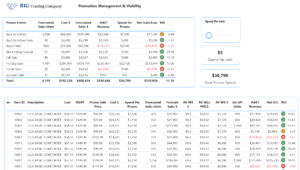
The promotional tool helps retailers and manufacturers determine the viability of a promotion
This is where price elasticity comes in. Based on past increases and decreases in selling price, correlations can be made as to how much of an impact price has on sales velocity. For example, if 7 out of 10 times when price was 30% off, we sold 100 more units, we have a strong correlation. If only 2 out of 10 times we got the same result, it is not. This isn’t a perfect science by any means, but it gives us odds one way or the other to assess risk. With the help of AI and smart algorithms, we can configure a calculator to help us determine the breakeven point where we make more money from a given investment.
Lack of Sophisticated Tools
Most companies have no formal solution for promotion planning and tracking. It is primarily done with a series of spreadsheets. That is why ERS created Promotion Manager and Tracker. It uses data imported by the user (proposed promotion, items, sale prices, promotional spend, and desired sales units), historic POS sales, and price elasticity models to assess the viability of a promotion. It can be used by both retailers and suppliers.
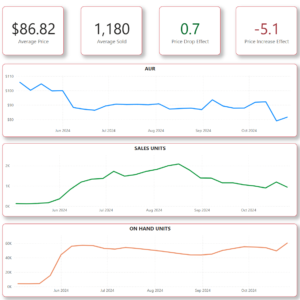
Use price elasticity models to determine the appropriate promotional price to increase sales without losing profit
The elasticity model provides variables for the price increase and decrease effect for every 1 cent change in price. It creates a baseline selling price and then shows the effect on sales above and below the baseline. The more correlations it has, the more confidence it has in the model. We can now pick any promotional sale price and see what affect it is expected to have on sales.
Once we know the estimated increase (or decrease) in sales, we can add in the additional financial support (Promotional Spend) and determine the return on investment.
Visualizing Promotions on A Calendar

For very promotional items or categories, keeping track of when and how often a promotion happens can be a challenge. The built-in tools and calendar in the Promotion Manager and Tracker enable the user to easily track and visualize when promotions are taking place. Each promotion is color coded. Data grids show which items are assigned to each promotion along with their viability. It can also be used for showing the approval status of a promotion.
Promotions get into the system via a provided template. Users can add, edit and remove promotions through the template.

Import promotions in the provided template
Comments are closed